Event Transport in Hobart: A Guide for Event Organisers
Organising an event in Hobart involves much more than choosing a venue, arranging catering and putting together a programme. You also need to consider how people will get there, where they will be picked up, what happens when several locations are involved and, importantly, how everyone gets home.
Well-planned event transport in Hobart can make the difference between guests arriving relaxed and on time or an event beginning with confusion, parking problems and delayed arrivals.
Whether you are organising a corporate function, gala dinner, sporting event, festival, private celebration, industry gathering or large group activity, transport needs to be considered as part of the event itself. Coordinated coach and bus transport can connect airports, hotels, event venues and other locations while keeping groups together and reducing the pressure on organisers.
Why Event Transport in Hobart Needs Early Planning
Transport sometimes gets left until the later stages of event planning. The venue is booked, guest numbers begin to take shape and the programme is organised before someone asks, “How is everyone actually getting there?”
By then, some of the easiest transport options may be more difficult to arrange.
Transport planning works better when it begins alongside venue and accommodation planning. Knowing where guests are staying, when the event begins, how many people need transport and where they need to travel makes it easier to create realistic schedules.
Early planning is particularly useful when an event involves:
The objective is not simply to have a bus waiting outside. Good event transport is about creating a coordinated movement plan that supports the entire event schedule.
What Does Event Transport in Hobart Include?
Different events create very different transport requirements.
A small business dinner may require one hotel pickup and a late-night return. A larger function might involve airport arrivals throughout the day, several hotel pickup locations, transfers to a venue and multiple return services.
Event transport can therefore include several different services.
Airport Transfers for Event Guests
For interstate and international visitors, the transport experience may begin at Hobart Airport.
Organised
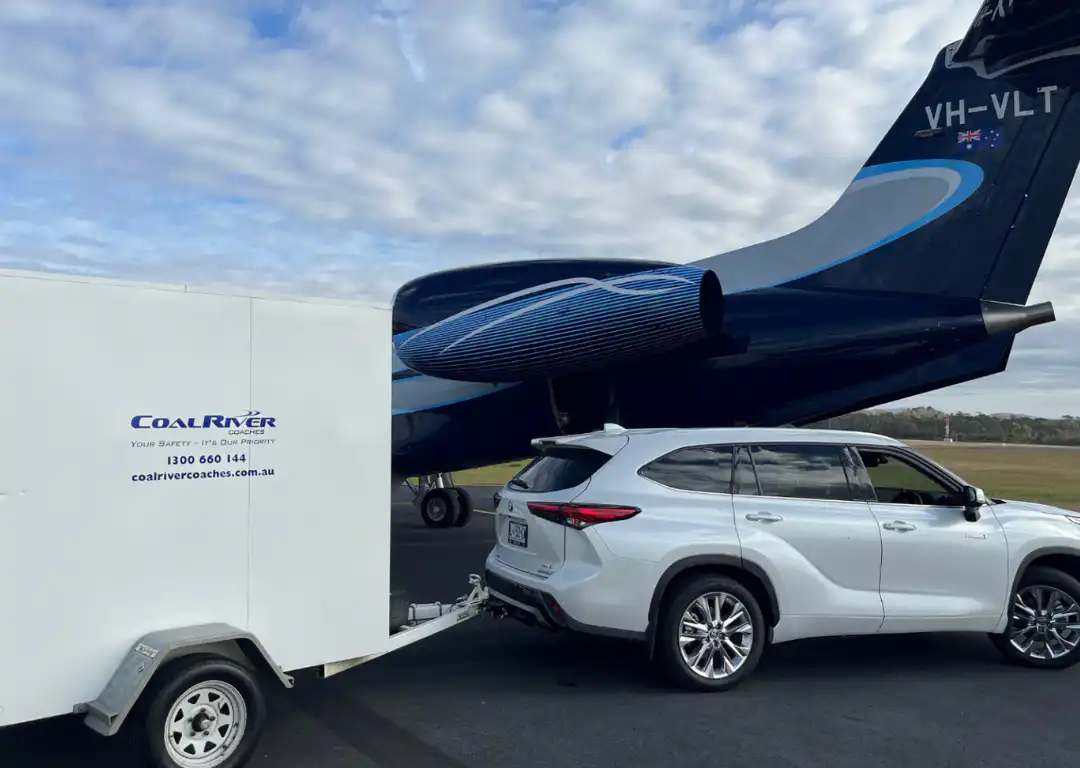
airport transfers can move guests directly to their accommodation, event venue or another scheduled destination without requiring each visitor to make their own arrangements.
For larger events, arrivals can be coordinated around flight schedules and passenger numbers. This is particularly useful when delegates, performers, speakers, corporate guests or organised groups are arriving on different flights.
Airport transport also needs to consider luggage. Passenger numbers alone do not always determine the appropriate vehicle. A group arriving for several days may have considerably more luggage than guests attending a local day event.
Hotel-to-Venue Transfers
When attendees are staying in Hobart hotels, scheduled venue transfers can make the event much easier to manage.
Instead of asking guests to organise taxis, rideshare services or private cars, designated pickups allow groups to travel together.
This can be especially valuable when the event venue has limited parking or is outside the Hobart CBD.
Clear communication is important. Guests need to know:
A simple transport schedule shared with guests before the event can prevent a surprising amount of confusion.
Shuttle Services Between Event Locations
Some events take place across several locations.
A programme might begin at a hotel, continue at a conference or function venue, move to an off-site activity and finish with dinner elsewhere.
Trying to coordinate individual transport for every movement can quickly become complicated.
Event shuttle services allow organisers to create planned routes between locations. Depending on attendance numbers and the event programme, this might involve one scheduled transfer or repeated shuttle loops.
Moving Large Groups Without Creating Bottlenecks
One of the biggest challenges in event transportation is not necessarily driving the group from one place to another. It is getting everyone boarded and departing on time.
If 100 guests finish an event at exactly the same time, expecting everyone to walk outside, find their transport and leave immediately is rarely realistic.
Boarding takes time.
People stop to talk, collect belongings, visit the bathroom or realise they have forgotten something. Larger groups may also need to be directed towards different vehicles.
Good planning takes these small but important details into account.
For larger events, organisers can consider:
These measures help avoid congestion outside the venue and make the departure experience much more orderly.
Matching the Vehicle to Your Event
There is no single vehicle that suits every event.
A small executive group travelling from Hobart Airport requires something very different from several hundred people travelling between hotels and a major event venue.
The right choice depends on passenger numbers, itinerary, luggage, accessibility requirements and the nature of the journey.
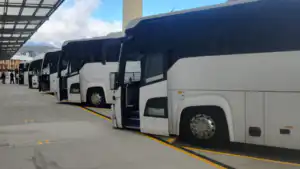
Smaller groups may be suited to minibuses or people movers, while larger groups can travel together in coaches. Major events may require several vehicles operating according to a coordinated transport schedule.
Comfort also matters.
If guests are travelling beyond Hobart or spending significant time on the road, vehicle comfort becomes an important part of their overall event experience.
Hobart Event Transport Is About Timing, Not Just Distance
Looking at a map and calculating the kilometres between two locations is not enough to build an event transport schedule.
Actual travel time can be affected by traffic, roadworks, weather, loading times, venue access and the number of passengers boarding.
Event traffic itself can create additional delays, particularly when many people are arriving at or leaving the same venue at similar times.
This is why realistic buffers are important.
If an event begins at 6.30 pm, scheduling a coach to arrive at 6.29 pm obviously leaves no room for unexpected delays. Guests also need enough time to leave the vehicle, enter the venue, find their seats and settle in.
Working backwards from the required arrival time generally produces a much more practical schedule.
Planning Transport for Evening Events
Return transport deserves as much attention as arrival transport.
This is particularly important for dinners, functions, celebrations and other events involving alcohol.
Providing organised transport can give guests a straightforward option for returning to hotels or agreed pickup points without driving themselves.
There may also be more than one preferred departure time.
Not everyone wants to leave an event simultaneously. Depending on group numbers and the programme, organisers may consider staggered return services, such as an earlier departure followed by a final service later in the evening.
This provides guests with some flexibility while keeping transport organised.
Event Transport Beyond Central Hobart
Not every Hobart event takes place within the CBD.
Southern Tasmania offers event spaces, wineries, tourism attractions, historic properties and regional venues beyond central Hobart. These locations can create memorable settings, but they also make transport planning more important.
Guests unfamiliar with Tasmania may not know the route, distances or local road conditions. Parking may also be limited at some venues.
Organised group transport allows everyone to travel together while reducing the number of individual vehicles arriving at the destination.
It also simplifies the return journey, particularly after an evening event.
When Events Involve Multiple Days
Multi-day events introduce another level of transport planning.
Guests might require:
Rather than treating every journey as a separate booking, organisers can build a complete transport programme around the event itinerary.
This creates continuity and makes communication easier for both organisers and guests.
It also helps identify potential timing conflicts before the event begins.
Build a Transport Run Sheet
For anything more complicated than a simple return transfer, a transport run sheet can be extremely useful.
It does not have to be complicated. It simply needs to make the essential information clear.
A useful run sheet can include:
For events involving several vehicles, the run sheet can also specify which group or hotel is allocated to each vehicle.
This gives the event organiser and transport provider a common reference point.
Think About the Entire Guest Journey
Transport is sometimes viewed as a background service, but guests experience it directly.
Imagine an interstate visitor attending an important Hobart event.
They land at Hobart Airport, find their arranged transfer easily, arrive at their hotel, receive clear instructions about the evening shuttle, board close to their accommodation and reach the venue with time to spare.
At the end of the evening, they know exactly where their return coach is waiting.
They have barely had to think about transport.
That is precisely what successful event logistics should achieve.
The best transport arrangements are often the ones guests hardly notice because everything simply happens when and where it is expected.
Common Event Transport Mistakes to Avoid
Even carefully planned events can encounter problems, but several common issues are preventable.
Leaving Transport Until the Last Minute
Popular dates can create greater demand for vehicles, particularly when several major events are taking place around Hobart.
Booking early provides more flexibility with vehicle selection and scheduling.
Underestimating Passenger Numbers
Always work with realistic attendance numbers and update the transport provider when numbers change.
Forgetting About Luggage
Airport groups may require significantly more storage than local passengers.
Using Vague Pickup Instructions
“Outside the hotel” may sound clear until you discover that the hotel has several entrances.
Use exact pickup locations wherever possible.
Scheduling Travel Too Tightly
Allow time for boarding, traffic, venue access and unexpected delays.
Planning Arrivals but Not Departures
Late-night return transport should be planned at the same time as the journey to the event.
Choosing a Hobart Event Transport Provider
For an event organiser, reliability is more important than simply finding a vehicle with enough seats.
Your transport provider becomes part of the event logistics team.
Look for experience with group transport, local route knowledge, suitable fleet options and the ability to coordinate multiple movements when necessary.
Communication is equally important. Event schedules can change, passenger numbers can move and flights can be delayed. Having clear communication between the organiser and transport team makes adjustments easier to manage.
Local knowledge also matters when deciding realistic travel times, suitable pickup points and routes between Hobart venues.
Information to Provide When Requesting an Event Transport Quote
The more information you can provide at the beginning, the easier it is to develop an accurate transport plan.
Before requesting a quote for event transport in Hobart, try to have the following information ready:
Do not worry if every detail has not yet been confirmed. Early discussions can still help identify the transport requirements that need to be considered as the event develops.
Why Local Experience Matters for Event Transport in Hobart
Event transport is ultimately a logistics service.
It requires an understanding of passenger movements, realistic travel times, vehicle capacity, pickup locations and how an event programme fits together.
Bus Charter Tasmania, operated by Coal River Coaches, has more than three decades of experience providing group transport across Hobart and Tasmania. The team works with corporate groups, conference delegates, event organisers, private groups, schools, touring groups and other organisations requiring coordinated transport.
With vehicle options for different group sizes and experience managing everything from individual transfers to large group movements, transport can be structured around the needs of the event rather than forcing the event to fit around the transport.
Planning an Event in Hobart?
Start thinking about transport while you are still planning the venue, accommodation and event schedule.
Well-organised event transport in Hobart can simplify airport arrivals, hotel pickups, venue transfers, group movements and late-night returns while giving organisers greater control over the timetable.
Most importantly, it allows guests to concentrate on the reason they came to the event rather than worrying about how they are going to get there.
When requesting a transport quote, provide your event date, approximate passenger numbers, pickup locations, venue details and expected timings. From there, Bus Charter Tasmania can help develop a transport plan suited to your event and group.