Large group transport Tasmania is a very different challenge to moving a handful of people from A to B. Moving 20 people is relatively straightforward — moving 100, 200 or more across the state is a different exercise entirely.
Good group transport in Tasmania starts with looking at the entire passenger movement rather than simply calculating how many seats are required. For large corporate groups, conferences, events, schools, sporting groups and organised tours, the goal is to match the right combination of vehicles with realistic schedules and clear passenger coordination. When those pieces are planned properly, even a complex movement can feel surprisingly simple to the people travelling.
Why Large Group Transport Tasmania Planning Takes Extra Care
For smaller groups, one vehicle, one pickup point and one departure time may be all that is required. Once passenger numbers increase, transport planning becomes more detailed.
Imagine 150 people attending an event in Hobart. They may be staying across several hotels, arriving at different times and travelling to a venue with a fixed start time. Putting everyone onto three coaches is only one part of the solution.
You also need to know which passengers are travelling on which coach, where each vehicle can safely collect them, how long boarding will take and what happens if one group is delayed.
This is where large group transport Tasmania planning becomes a logistics exercise rather than simply a bus booking.
Start With Passenger Numbers, But Don't Stop There
The first question is naturally, “How many people are travelling?”
The next questions are just as important.
Before choosing vehicles, consider:
- Where passengers are starting from
- Whether everyone is travelling to the same destination
- How much luggage or equipment they have
- Whether accessible transport is required
- Whether the group needs to stay together
- How many stops are involved
- Whether there are fixed arrival deadlines
- How long passengers will spend on the road
A 50-person airport transfer with suitcases can have different vehicle requirements from a 50-person local event transfer with no luggage.
This is why passenger capacity should never be considered in isolation.
Matching Vehicles to Large Passenger Numbers
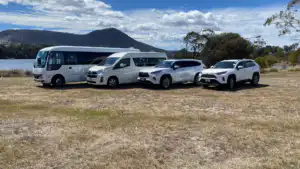
One of the advantages of professional group transport in Tasmania is the ability to select vehicles according to the movement rather than trying to make every journey fit the same coach.
One Large Coach or Several Smaller Vehicles?
The answer depends on the group.
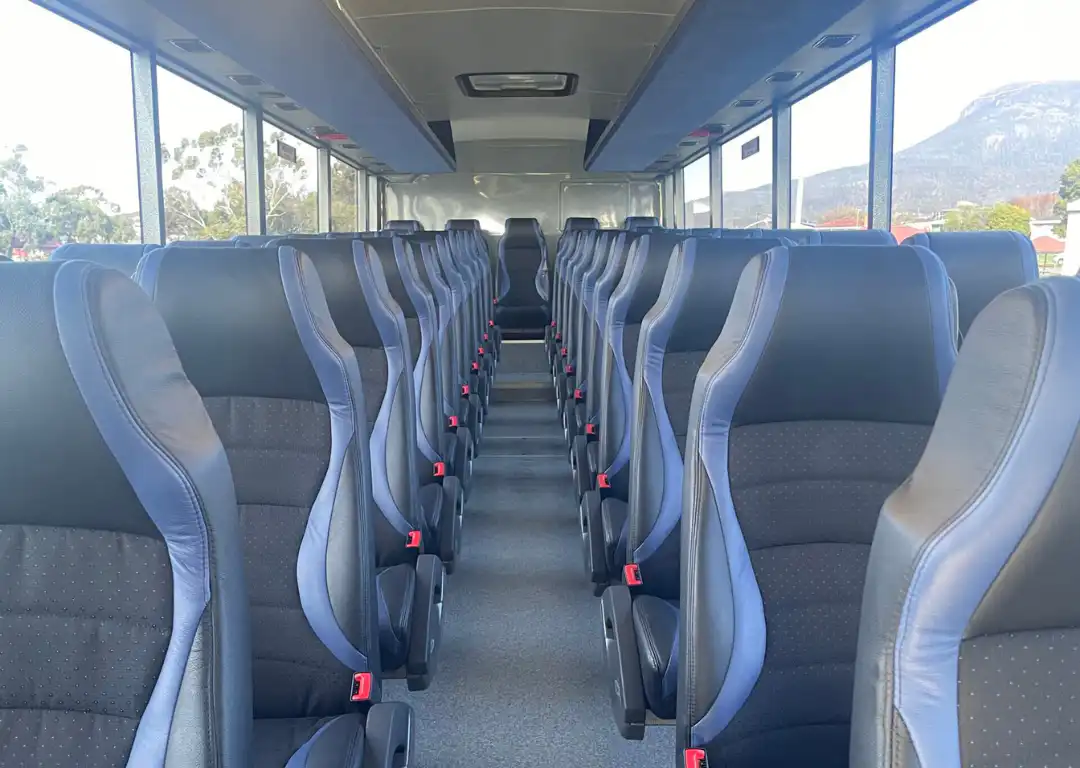
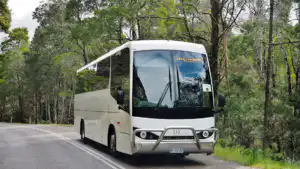
Keeping passengers together in large coaches can simplify communication and reduce the number of vehicles arriving at a venue. However, several vehicles may be more practical when passengers are spread across multiple accommodation locations or have different schedules.
For example, a large corporate event could use full-size coaches for the main hotel-to-venue movement while smaller vehicles handle executive guests, speakers or passengers arriving on different flights.
The best fleet plan is therefore not always the one using the fewest vehicles. It is the one that makes the overall passenger movement work efficiently.
Coordinating Multiple Vehicles
Once several coaches or minibuses are involved, coordination becomes particularly important.
Each vehicle should have a clearly defined role within the transport plan. That could mean assigning vehicles according to hotels, passenger groups, arrival times or destinations.
Instead of telling 150 passengers to “get on one of the buses”, an organiser might allocate:
- Coach 1 to Hotel A
- Coach 2 to Hotel B
- Coach 3 to Hotel C
- A smaller vehicle to speakers or VIP guests
Simple allocation makes boarding easier and reduces the chance of one vehicle filling while another leaves with empty seats.
It also makes passenger counts easier to manage because organisers know approximately how many people should be travelling on each vehicle.
Build Boarding Time Into the Schedule
A common mistake with large group transport is allowing plenty of driving time but not enough boarding time.
Fifty people do not board a coach instantly. Passengers need to leave their accommodation or venue, find the correct vehicle, load luggage where required and take their seats.
With several coaches, this process can take longer.
Rather than treating the pickup time and departure time as the same thing, allow a clear boarding window. Guests can be told when they need to be at the pickup point and when the coach will actually depart.
This small distinction can make the entire schedule more realistic.
Staggered Departures Can Solve Bigger Problems
Not every large group needs to move simultaneously.
Staggered transport can be useful when venues have limited loading areas, passengers are arriving from different locations or a large number of people leaving at once would create congestion.
For example, return transport after an evening event might include an earlier coach for guests ready to leave, followed by later services for those staying until the end.
Similarly, conference transport might operate shuttle loops between accommodation and a venue rather than attempting one enormous movement.
Good planning is about finding the movement pattern that suits the event, not automatically putting everyone on the same timetable.
Tasmania Adds Its Own Transport Considerations
Tasmania’s size can make destinations look relatively close on a map, but group transport needs to consider more than kilometres.
Regional roads, weather, roadworks, event traffic, comfort stops and loading times can all affect a large-group schedule. A journey involving several coaches also needs enough flexibility to keep the vehicles coordinated without creating unnecessary pressure on drivers or passengers.
This becomes particularly important for statewide itineraries involving destinations beyond Hobart.
When planning group transport Tasmania-wide, realistic travel times are far more useful than an itinerary built around the shortest theoretical driving time.
Don't Forget Luggage and Accessibility
Two groups with exactly the same passenger numbers may need very different transport arrangements.
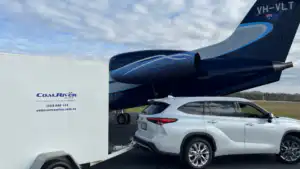
Airport transfers can involve suitcases, hand luggage and equipment. Sporting groups may travel with substantial gear. Touring groups can have luggage for several days.
Accessibility should also be discussed early rather than treated as a last-minute addition.
Bus Charter Tasmania’s fleet includes all-abilities coaches with wheelchair configurations, alongside vehicles designed for large group, corporate and touring movements.
Knowing these requirements at the planning stage makes it much easier to allocate suitable vehicles while keeping the wider schedule running smoothly.
Create One Clear Transport Plan
Large group movements become difficult when information is scattered between emails, messages and different organisers.
A central transport plan or run sheet should record the essentials, including:
- Vehicle allocation
- Passenger numbers
- Pickup points
- Boarding and departure times
- Destinations
- Stops
- Group contacts
- Luggage requirements
- Accessibility requirements
- Return journeys
For multi-vehicle movements, it should also identify which passengers or groups are assigned to each vehicle.
That gives the organiser, transport provider and other people involved in the event a common reference point.
Group Transport Tasmania Organisers Can Plan With Confidence
Getting large group transport Tasmania planning right comes down to booking early, matching the right vehicle size to your group, and confirming pickup points well in advance.
Bus Charter Tasmania, operated by Coal River Coaches, has more than 33 years of experience in coach charter and group transport, with a fleet suited to small groups through to major passenger movements across the state.
Whether you are coordinating a corporate event, conference, tour, school group, sporting trip or another large gathering, planning the vehicles, passenger allocations, pickup points and timings together can make the entire journey easier to manage.
If you’re still working out the details, our team can help make large group transport Tasmania planning simple, from vehicle selection through to the day itself.