Hobart is a city where history, culture, food and nature sit remarkably close together. Around the waterfront, old sandstone warehouses stand beside restaurants, galleries and working docks. A short walk uphill leads into the historic streets of Battery Point, while beyond the city centre, gardens, museums and kunanyi / Mount Wellington provide completely different experiences.
This variety is one of the reasons Hobart works so well for visitors with different interests. You can spend time exploring Tasmania’s history, visit one of Australia’s most unusual art museums, enjoy the waterfront, browse a market, discover local food or head towards the mountain for panoramic views.
The city may be compact, but it is worth choosing what matters most rather than trying to fit everything into a single visit. Opening times, market days, walking distances, traffic, weather and access can all affect how comfortably the different parts of Hobart fit together.
Why Visit Hobart?
Hobart is Australia’s second-oldest capital city, and much of its history remains visible in its streets, waterfront and architecture. Yet it does not feel like a city preserved purely for its past.
Historic warehouses now contain galleries, restaurants and shops. The waterfront remains an active harbour. Contemporary art has become a major part of Hobart’s identity, while local food, markets and Tasmania’s produce provide another reason to explore.
Then there is the setting itself. The River Derwent stretches alongside the city, and kunanyi / Mount Wellington rises behind it, creating a close connection between the urban landscape and Tasmania’s natural environment.
For visitors using Hobart as a base, the city also provides convenient access to many of southern Tasmania’s best-known destinations, including Richmond, Bruny Island, Port Arthur, the Huon Valley and Mount Field.
Things to See and Do in Hobart
Explore Salamanca Place
Salamanca Place is one of the best places to begin exploring Hobart.
The long row of Georgian sandstone warehouses reflects the area’s maritime past, but today the buildings contain restaurants, cafés, galleries and shops. The precinct sits close to the waterfront and below Battery Point, making it easy to combine several Hobart experiences without repeatedly getting back into a vehicle.
Salamanca has a different character depending on when you visit. During the week, it is an attractive historic and dining precinct. On Saturday, Salamanca Market transforms the area with stalls featuring
Tasmanian produce, food, arts, crafts and locally made products. The market has operated for more than 50 years and remains one of the city’s best-known attractions.
If the market is important to your visit, allow enough time to explore it properly rather than treating it as a quick stop.
Walk Along Hobart's Waterfront
Hobart’s waterfront is close enough to Salamanca to explore the two areas together, but it has a character of its own.
Constitution Dock, Franklin Wharf and the surrounding piers reflect Hobart’s continuing relationship with the sea. Fishing boats, sailing vessels, seafood restaurants, historic buildings and views across the River Derwent all contribute to the atmosphere.
This is an area that benefits from some unstructured time. Rather than moving directly from one attraction to another, visitors can walk beside the harbour, stop for something to eat or simply enjoy the activity around the docks.
Much of the central waterfront is relatively easy to explore on foot, making it particularly useful when several people are travelling together but want a little freedom to explore at their own pace.
Discover Battery Point
From Salamanca, head uphill and the character of Hobart changes quickly.
Battery Point is one of the city’s oldest neighbourhoods, with narrow streets, colonial cottages, historic houses and small cafés. Arthur Circus is among its most recognisable areas, while Kelly’s Steps provide a historic pedestrian connection between Salamanca Place and Battery Point.
Walking is the best way to appreciate the neighbourhood, but the hills and steps are worth considering if anyone has limited mobility.
For visitors interested in architecture and history, Battery Point provides a quieter and more residential contrast to the activity around Salamanca and the waterfront.
Visit the Tasmanian Museum and Art Gallery
The Tasmanian Museum and Art Gallery, usually known as TMAG, is conveniently located near Hobart’s waterfront.
Its collections and exhibitions provide an introduction to Tasmania’s natural environment, history, art and culture, including important material relating to Tasmanian Aboriginal heritage.
TMAG can be particularly useful for first-time visitors because it provides context for many of the places they may see elsewhere in Tasmania. It is also centrally located, making it easier to include without requiring a lengthy journey across the city.
Opening days and exhibition details should be checked before visiting.
Slow Down at the Royal Tasmanian Botanical Gardens
Not every Hobart experience needs to involve busy streets or major attractions.
The Royal Tasmanian Botanical Gardens provide a peaceful change of pace close to the city centre. Established in 1818, the gardens cover approximately 14 hectares and contain historic plant collections, landscaped areas and specialised displays.
Visitors can explore at their own pace, making the gardens particularly suitable when different ages and interests need to be considered.
They can also provide a useful alternative for visitors who prefer gardens and gentle walking to museums, shopping or more demanding outdoor activities.
Make Time for Mona
Mona, the Museum of Old and New Art, has become one of Hobart’s most distinctive attractions.
Located at Berriedale, north of the city centre, the museum combines ancient, modern and contemporary art in an unconventional underground setting beside the River Derwent.
Mona is not a place to squeeze into a spare hour. Visitors who are genuinely interested in seeing the museum should allow enough time to experience it without rushing.
Getting there can also be part of the experience. Mona operates a ferry from Brooke Street Pier on Hobart’s waterfront, with the journey taking approximately 30 minutes. The museum can also be reached by road.
Museum admission and ferry travel have separate ticketing arrangements, and bookings, opening days and current visitor information should be checked before travelling.
See Hobart from kunanyi / Mount Wellington
kunanyi / Mount Wellington dominates Hobart’s skyline and provides one of the most dramatic changes of scenery available close to the city.
The mountain rises 1,271 metres above sea level. On a clear day, the Pinnacle provides broad views across Hobart, the River Derwent and southern Tasmania.
However, conditions at the summit can be very different from those in central Hobart. Temperatures are generally lower, strong winds are common and cloud can move across the mountain quickly. Weather can also affect access to Pinnacle Road.
This makes flexibility useful. If the mountain is one of the most important parts of your Hobart visit, check the conditions rather than assuming that clear weather beside the waterfront means clear views at the summit.
There is also much more to the mountain than the Pinnacle, so it is covered separately in our kunanyi / Mount Wellington Destination Guide.
Choose What Interests You Most
One of Hobart’s advantages is that visitors do not all have to enjoy the city in exactly the same way.
For history and architecture, Salamanca, Battery Point, the waterfront and TMAG provide plenty to explore.
Art and culture may lead you towards Mona, TMAG and Salamanca’s galleries.
Visitors interested in food can spend more time around Salamanca, the waterfront and the city’s restaurants and cafés rather than filling every hour with formal sightseeing.
For gardens and scenery, the Botanical Gardens and kunanyi / Mount Wellington provide two very different experiences.
The important thing is to leave enough time for the places that genuinely interest you. Hobart’s attractions may appear close together on a map, but adding too many stops can leave very little time to enjoy any of them.
Good to Know Before You Go
Salamanca Is Different on Saturdays
Saturday is Salamanca Market day, and this changes traffic and vehicle access around Salamanca Place. The street is closed to normal traffic while the market operates.
If visiting with a larger number of passengers, the practical drop-off and collection point may therefore be different from other days.
Hobart Is Walkable, but There Are Hills
Salamanca and much of the central waterfront are well suited to exploring on foot. Battery Point and some surrounding areas involve hills, steps and uneven historic streets.
Walking ability should be considered when deciding how much of the city to explore on foot, particularly for older passengers or anyone with mobility limitations.
Allow Time Rather Than Just Distance
One of the easiest mistakes to make in Hobart is assuming that attractions can be fitted together simply because they are geographically close.
Mona requires time inside the museum. Salamanca Market deserves time to browse. Battery Point is best explored on foot. A trip to kunanyi / Mount Wellington involves mountain roads and can be affected by weather.
Allowing for the experience itself, rather than only the driving distance, usually results in a more relaxed visit.
Check Major Attractions Before Travelling
Opening days, ticketing arrangements and visitor requirements can change. Attractions such as Mona should be checked and booked where necessary before setting out.
For larger parties, advance arrangements can be particularly important.
Dress for Changing Conditions
Hobart’s weather can change during the day, so layers are useful.
This becomes especially important if your plans include the waterfront and kunanyi / Mount Wellington on the same day, as conditions at sea level and at the summit can be very different.
Using Hobart as a Base
Hobart is well positioned for exploring southern Tasmania.
Richmond and the Coal River Valley offer history, vineyards and countryside. Bruny Island combines coastal scenery, wildlife and local produce. Port Arthur and the Tasman Peninsula bring together convict heritage and dramatic coastal landscapes. The Huon Valley offers orchards, forests and regional produce, while Mount Field provides waterfalls and tall forests.
These destinations differ considerably in travel time and logistics.
Bruny Island requires a ferry crossing. Port Arthur involves a longer road journey and attractions that deserve enough time once you arrive. Mount Field takes visitors inland, while Richmond is much closer to Hobart.
Choosing destinations according to what interests you and how much time you genuinely have available is usually more rewarding than trying to cover several regions in a single day.
Getting Around Hobart with Bus Charter Tasmania
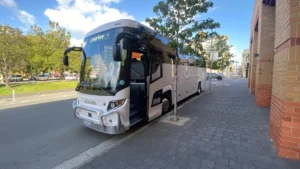
Transport can be particularly useful when several people are travelling together, when the visit includes attractions outside the city centre or when passengers have different mobility requirements.
Bus Charter Tasmania provides
transport for private parties, schools, clubs, corporate visitors, conference delegates, cruise passengers and other travellers visiting Hobart and southern Tasmania.
Tell us where you are starting from, how many people are travelling and which Hobart experiences interest you. We can help with practical considerations such as travel times, passenger drop-offs, collection points and access, without requiring you to arrive with every minute of your visit already planned.
Ready to Explore Hobart?
From Salamanca and Battery Point to Mona, the waterfront, gardens and mountain scenery, choose the parts of Hobart that interest you most and allow yourself enough time to enjoy them.